Dumpster permits in Canada — when you need one, what it costs, how to apply.
The rule is simple: driveway no, street yes. The complications come in the details — cost, application time, what the city wants to see. Here's the by-city breakdown for the major Canadian metros.
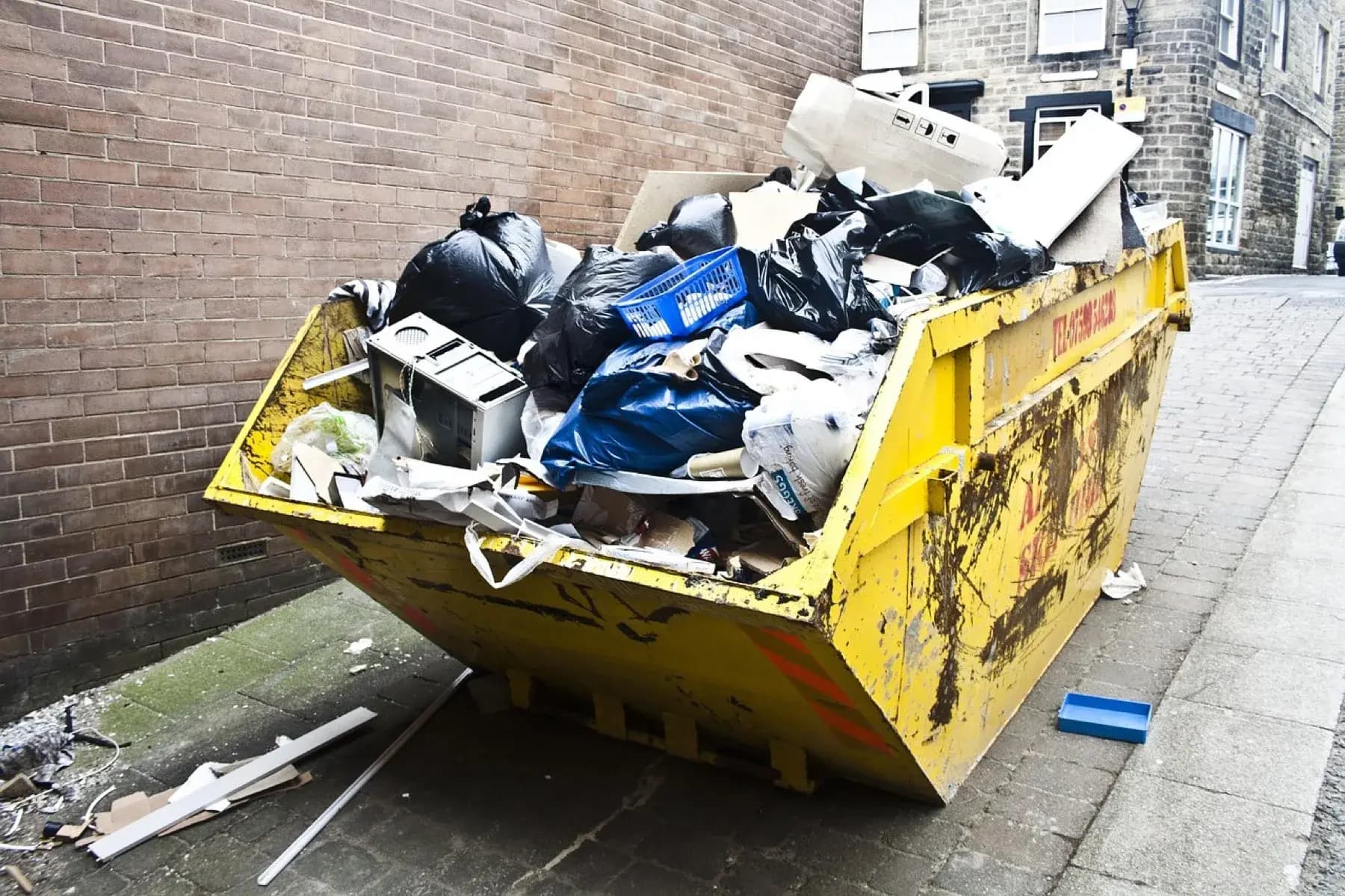
Across Canada, the permit rule for roll-off dumpsters is the same: if the bin sits on your private property (driveway, lawn, or backyard), no permit is required. If the bin sits on a public street, boulevard, or sidewalk, you need a permit from the city.
About 75% of our Wastebins.ca deliveries are driveway placements — no permit needed. The other 25% are street placements, mostly downtown condos, semis without driveway space, and commercial sites. This guide is for the street-placement scenario.
The driveway-vs-street test
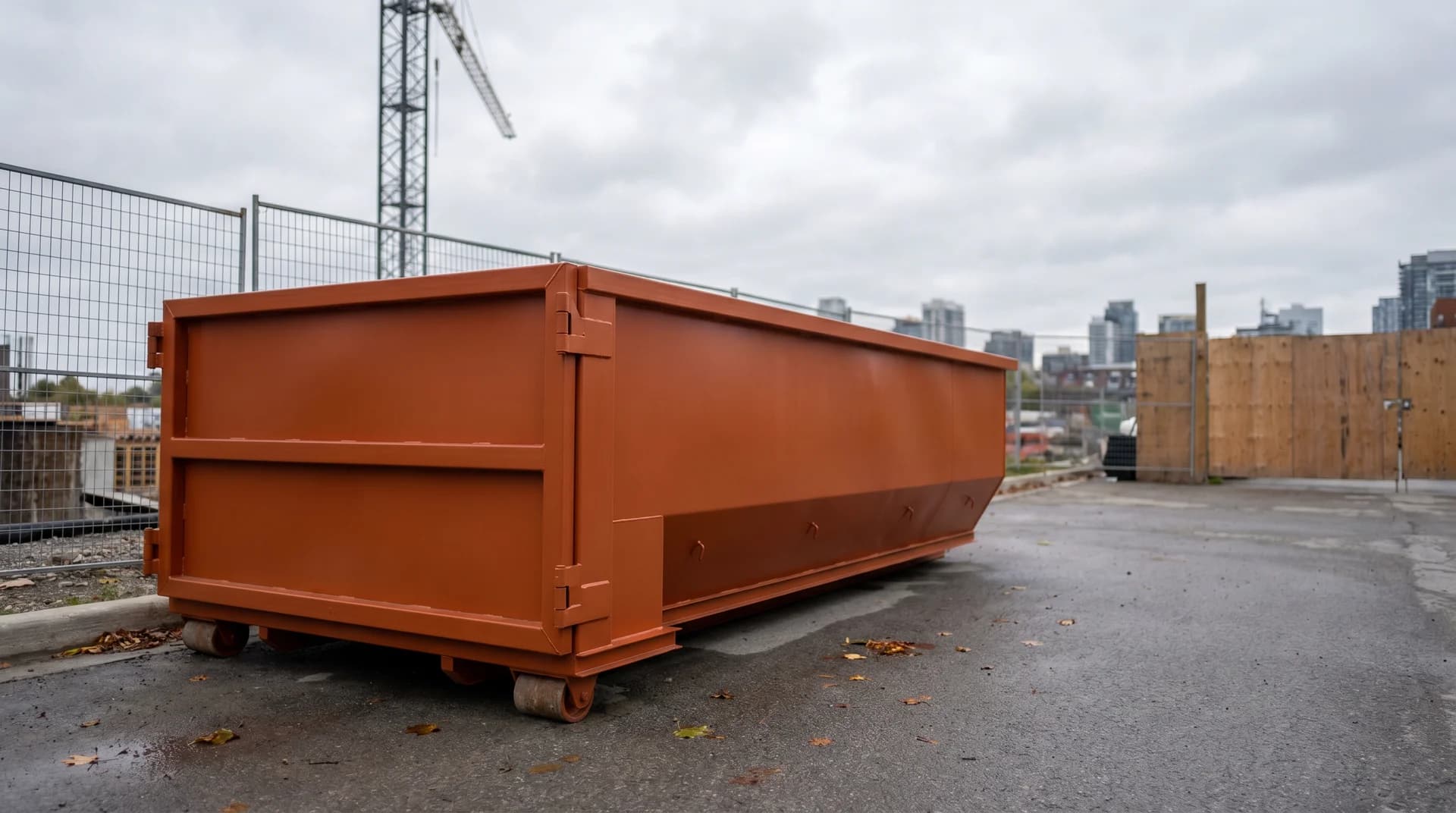
Ask yourself: where will the bin physically touch the ground?
- On your driveway, even partially. No permit needed. Even if the bin extends past the property line a few inches, as long as it's not blocking the sidewalk or street, you're fine.
- On the boulevard (the strip between sidewalk and curb). Permit required. The boulevard is city land in every Canadian municipality.
- On the street itself (against the curb). Permit required, often with additional cones, reflective tape, or warning signs.
- On a sidewalk. Generally not allowed in most cities even with a permit. Pedestrian access can't be blocked.
By city — permit costs and process
Toronto
Toronto's residential road occupation permit costs $32/day for a standard residential bin. Commercial bins run higher. Applications go through the city's Road Occupation Permit system online. Same-day approval is typical for residential. Required documents: site sketch showing the bin location and dimensions.
Montreal / Ville de Montréal
Montreal is the most generous of the major metros: residential permits up to 7 days are free in most boroughs. Beyond 7 days, a per-day fee kicks in (typically $20-50 depending on borough). Applications go through your specific borough office — see the Ville de Montréal site for borough-specific forms. Plateau-Mont-Royal, Verdun, and Rosemont each have their own application portal.
Vancouver
Vancouver requires a $50 base application plus a per-day fee of around $15-25 for residential. Commercial bins cost more. Applications go through the Street Use Permit portal. Downtown zones have stricter rules — overnight bins must often be removed by 6 AM in commercial cores. Plan for 2-3 day turnaround on application processing.
Calgary
Calgary's permit is $50 base plus $5/day after the first three days. Applications go through the City of Calgary Roads department. Online application is straightforward — same-day approval is typical for residential placements.
Ottawa
Ottawa's "Road Cut Permit" or "Encroachment Permit" applies for street dumpsters: about $75 base plus per-day fee. Applications through ottawa.ca. Allow 5 business days for processing in busy seasons. Gatineau (the Quebec side) has its own separate process through the Ville de Gatineau.
Edmonton, Winnipeg, Quebec City
These mid-sized metros all run similar systems: $30-75 base permit, online application, 1-3 day approval. Specific links: edmonton.ca, winnipeg.ca, ville.quebec.qc.ca.
Smaller cities
For cities under 100,000 population, the permit process often happens in person at the municipal office or public-works department. Costs are usually lower ($15-50) but turnaround can be longer (5-10 days). Call ahead to confirm what documents to bring.
What goes on the permit application
Most cities ask for:
- Bin dimensions (length, width, height) — we provide these on booking
- Exact street address and a sketch showing bin placement
- Start and end dates of the rental
- Contact info for the property owner or contractor
- Insurance certificate (commercial permits only — Wastebins.ca provides this on request)
Common pitfalls
- No-parking signs. If the dumpster takes a parking space, some cities require you to post temporary "no parking" signs 24-72 hours in advance. Don't skip this — the city can ticket cars towed away later.
- Streetcar or bus routes. Toronto and Montreal both restrict street dumpsters on streetcar and bus routes. Verify before applying.
- Bike lanes. Vancouver, Toronto, and Montreal all prohibit street dumpsters that block painted or protected bike lanes.
- Fire hydrants. Every city requires a minimum 3-meter clearance from a fire hydrant.
- Tree canopy. Some cities want the bin away from mature trees to avoid root damage from the truck.
If the city says no
Sometimes the city denies the permit — usually because the location blocks sightlines, a bike lane, a fire hydrant, or scheduled street work. Options if that happens:
- Move the bin to the driveway. If feasible, we can reposition during the rental.
- Stage at a nearby property. A friendly neighbor with driveway space can host the bin and you cart debris to it.
- Switch to junk-removal service. For small jobs, a hauler crew that takes everything in one shot can be cheaper than getting permits. See our dumpster vs junk removal guide.
Need help with the permit math in your city? Our city pages have local pricing and depot details. Or just get a quote and dispatch will walk you through the permit process for your specific address.
Common questions.
Do I need a permit for a dumpster on my driveway?
No. A dumpster placed entirely on your private property — driveway, lawn, or backyard — does not require a permit anywhere in Canada. Permits are only required when the bin sits on a public street, boulevard, or sidewalk.
How long does it take to get a dumpster permit?
Online permits in most major Canadian cities are issued same-day or within 2-3 business days. Some smaller municipalities require an in-person application and may take 5-7 days. Plan accordingly if you have a tight construction schedule.
Who gets the permit — me or the dumpster company?
The property owner or contractor is usually responsible for the permit, not the dumpster company. We can advise on the process and provide bin dimensions for the application, but the homeowner or general contractor pulls the permit.
What happens if I don't get a permit when one is required?
The city can issue a ticket or fine ($150-500 in most metros), require you to move the bin immediately, and possibly impound it at your expense. Cheaper to spend the $30-50 on the permit.
Can a dumpster block the sidewalk?
No. Even with a permit, the dumpster cannot block a sidewalk or fire hydrant. If your only street option blocks pedestrian access, you may need a sidewalk closure permit plus orange cones and signage.
Are there time-of-day restrictions?
Some cities (notably Vancouver and Toronto downtown) restrict overnight street dumpsters in commercial zones, requiring removal by 6 AM. Residential zones typically have no time restriction. Check your specific permit conditions.
Ready to book a dumpster?
Same-day delivery in 60 Canadian cities. No card required. Bilingual dispatch.
Get a quote →