Dumpster size chart — 10, 14, 20, 30, 40 yard roll-off bins compared.
The wrong size costs you twice. A 10-yard you overflow means a second rental fee plus the headache of staging. A 30-yard you half-fill means paying for empty steel. Here's how to pick the right size in five minutes.
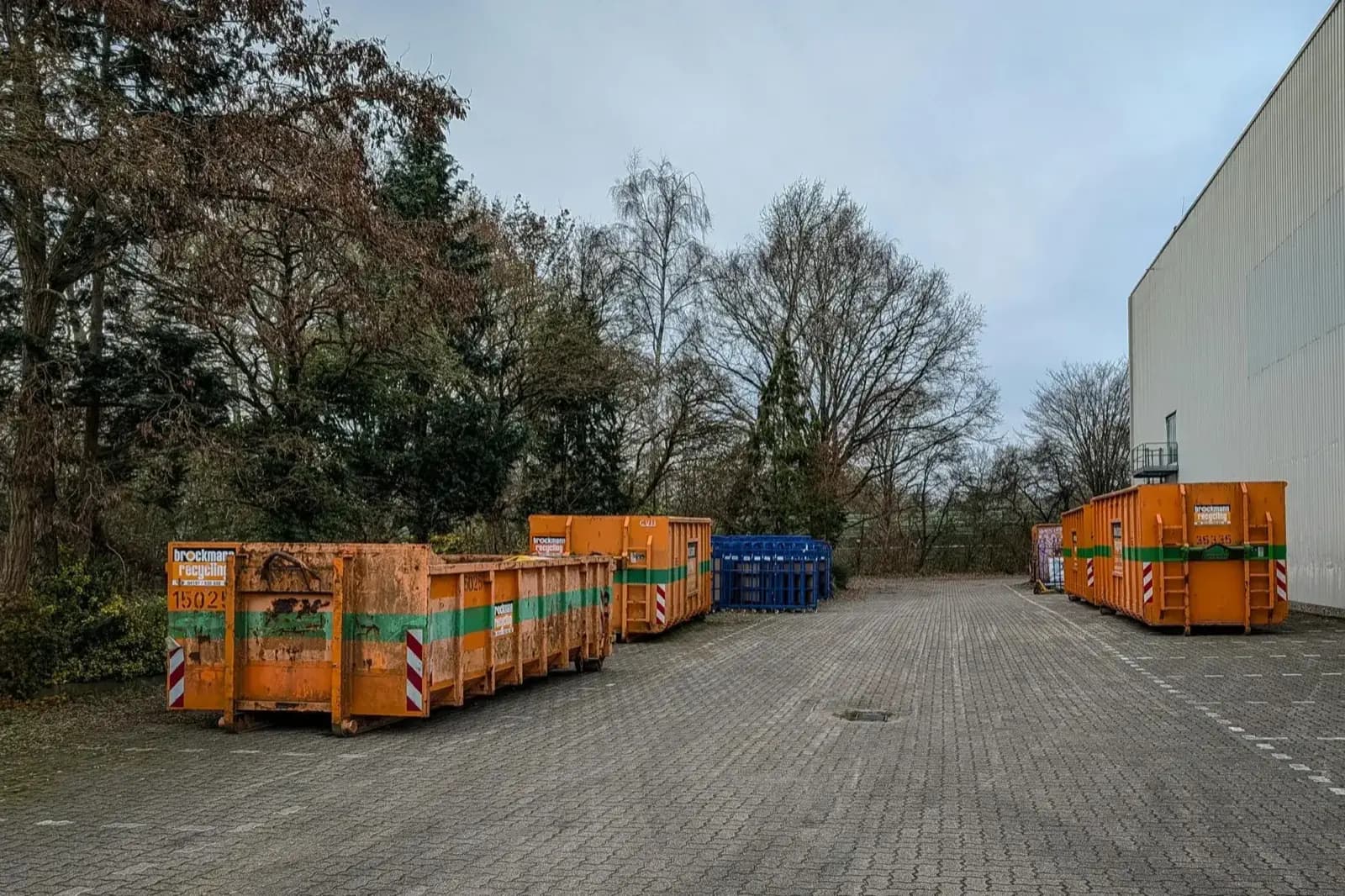
Dumpster sizes are measured in cubic yards — the volume the bin can hold, not its physical dimensions. A "10-yard" dumpster holds 10 cubic yards of debris. To put that in mental terms: one cubic yard equals roughly three full kitchen garbage bags, or one standard washing machine, or about half a pickup truck bed.
Across Canada, the five standard roll-off sizes are 10, 14, 20, 30, and 40 yards. Every reputable hauler — including Wastebins.ca — carries this lineup, with the 14-yard being the most-rented size for typical homeowner renovations.
The 60-second size lookup
| Size | Best for | Pickup-truck equivalent | From (CAD) |
|---|---|---|---|
| 10-yard | Single-room cleanouts, small garage, deck or fence removal, one-bathroom reno | 3-4 loads | $349 |
| 14-yard | Kitchen reno, mid-size renovation, two-room cleanout, small roof patch | 4-5 loads | $429 |
| 20-yard | Whole-home renovation, roofing tear-off, large estate cleanout, multi-room reno | 6-8 loads | $549 |
| 30-yard | Demolition, new construction, commercial fit-out, very large home cleanout | 9-12 loads | $699 |
| 40-yard | Major industrial cleanout, large demo, multi-unit construction | 12-16 loads | $899 |
The 10-yard — small, manageable, underrated
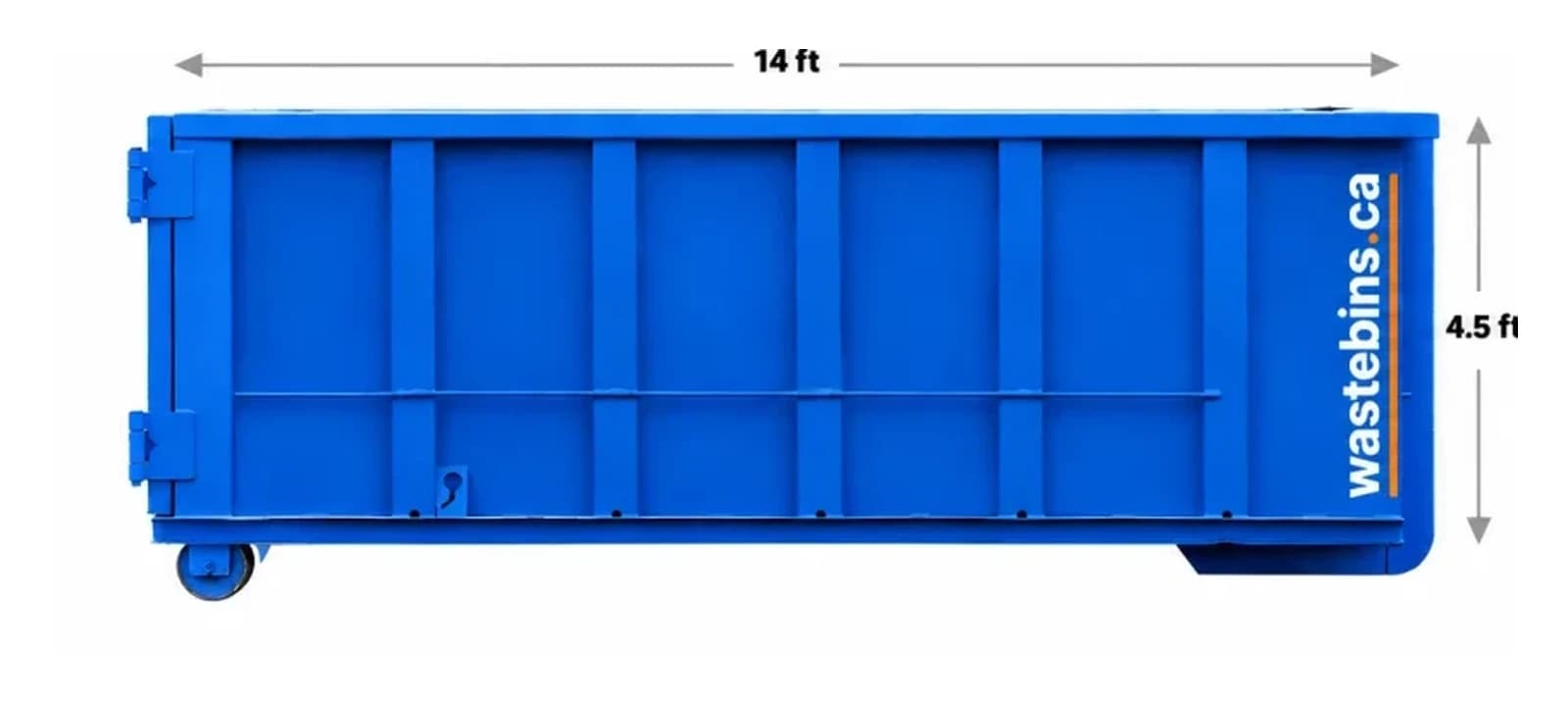
A 10-yard dumpster is 12 feet long, 8 feet wide, and about 3.5 feet tall. It fits in a single-car driveway with room to spare. The low side height means you can throw debris in from standing height without lifting it overhead — a real ergonomic win for DIY homeowners.
This size is right when: you're cleaning out a single room (basement, garage, attic); removing a deck, fence, or small shed; doing a one-bathroom or one-room renovation; or hauling away a single appliance plus the surrounding debris. The 10-yard typically maxes out at 2 tons (4,000 lb) of debris, which is rarely a concern for light residential waste.
The 14-yard — the workhorse
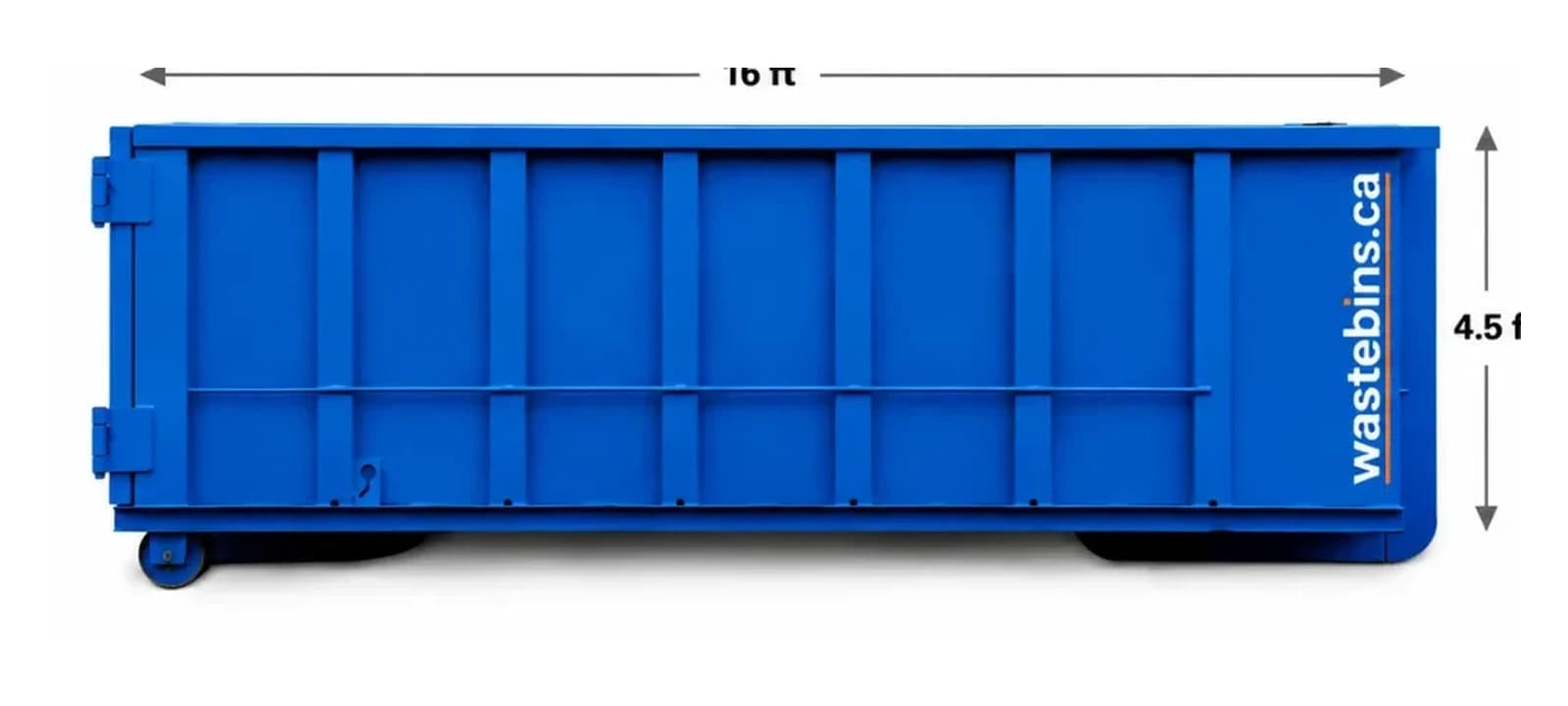
This is the size we rent most often. It's the sweet spot for a typical kitchen renovation, a full basement cleanout with old furniture, or a mid-size renovation involving cabinets, countertops, and flooring removal. Twelve feet long, 8 feet wide, about 4.5 feet tall — slightly larger than the 10-yard but still driveway-friendly.
The 14-yard is roughly the volume of 4-5 full pickup loads of mixed renovation debris. For most homeowners, it's also a budget sweet spot: about $80-100 more than the 10-yard, but with 40% more capacity. If you're between sizes, this is usually the right call.
The 20-yard — whole-home renos and roofing
The 20-yard is 22 feet long, 8 feet wide, about 4.5 feet tall. It still fits a standard driveway lengthwise. Capacity-wise, it handles a whole-floor renovation (think gutting an entire main floor), a typical single-family roof tear-off (one to two layers of shingle), or a large estate cleanout with appliances, furniture, and miscellaneous junk.
For roof tear-offs specifically, the 20-yard is the standard because shingle is heavy. A typical single-family asphalt-shingle roof produces 2-3 tons of debris — well within the 20-yard's 3-4 ton allowance.
The 30-yard — demolition and new construction
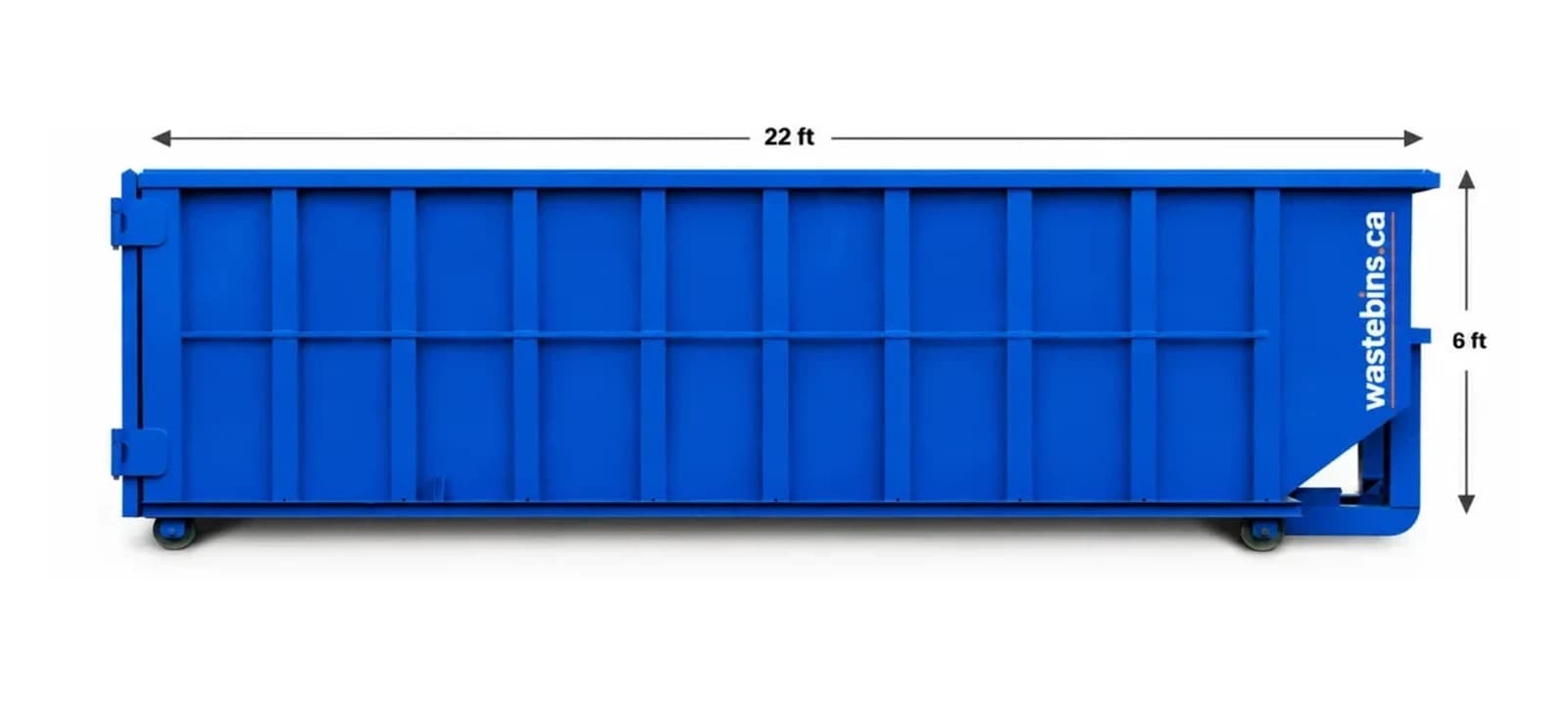
Step up to a 30-yard when you're demolishing an entire structure (garage, shed, or small home), starting new construction, or running a multi-day commercial fit-out. Twenty-two feet long, 8 feet wide, about 6 feet tall — the height difference is noticeable. You may want a step or ramp to load it efficiently.
This is also the right pick for contractors running larger renovation jobs where they expect 9-12 pickup loads of mixed debris. Capacity caps around 4-5 tons.
The 40-yard — industrial scale
The 40-yard is reserved for big jobs: large demolitions, industrial cleanouts, multi-unit residential builds, or commercial waste hauling. Same footprint as the 30-yard but taller — about 8 feet high. Loading typically requires a ladder, ramp, or mechanical assistance.
Most homeowners will never need a 40-yard. If you're a contractor moving 12+ pickup loads of debris from a single site, this is your size.
Weight versus volume — read this before booking
Every dumpster has two limits: a volume limit (how much fits in the bin) and a weight limit (how much the truck can legally haul). Heavy materials hit weight first; light materials hit volume first.
Heavy material guide:
- Concrete, asphalt, dirt: one cubic yard weighs about 2,500 lb (1.1 tons). A 10-yard will hit weight limit at about 1.5 yards of pure concrete.
- Shingles: one cubic yard weighs about 600 lb. A 20-yard handles a typical asphalt roof tear-off.
- Drywall and lumber: light enough that volume is the typical limit, not weight.
- Furniture and appliances: bulky but light. Volume is almost always the binding limit.
If your job involves concrete, brick, or dirt, mention it when booking. We may recommend a smaller bin with a heavy-debris classification rather than a larger bin you can't legally fill.
Cost considerations beyond the size
The base rental fee is just one variable. Other cost drivers:
- Rental period: 7 days is standard; extensions are $25-45 per day depending on size.
- Overage: if you exceed the weight limit, the overage fee is typically $80-120 per ton.
- Prohibited items: any hazardous waste, paint, or refrigerant we have to extract triggers a special-handling fee.
- Distance from depot: for cities far from our five depots, freight adjustment may apply. See our city pages for transparent local pricing.
For the full cost breakdown, see our dumpster rental cost guide.
Still not sure? Use the rule of thumb
If you can describe your job in one of these terms, we can size it without further questions:
- One-room cleanout → 10-yard
- Kitchen or bathroom reno → 14-yard
- Whole-home reno or roof → 20-yard
- Demolition or new build → 30-yard
- Industrial or multi-unit → 40-yard
And if you're between sizes, go one up. The cost difference is small; the cost of being too small (a second rental fee plus a paused job) is significant.
For pricing in your specific city, see our dumpster rental hub or jump straight to a free quote. We deliver same-day in 60 Canadian cities. If you're a contractor wondering whether to rent or buy, the calculator runs the math in two clicks.
Common questions.
What size dumpster do I need for a kitchen renovation?
A 14-yard dumpster covers most full kitchen renovations — cabinet removal, drywall, old flooring, and appliance haul-away typically come in under 5 tons of debris. For a kitchen-plus-flooring or kitchen-plus-bath job, step up to a 20-yard.
How many cubic yards is a pickup truck?
A standard full-size pickup bed holds roughly 2-3 cubic yards. So a 10-yard dumpster equals 3-4 pickup loads; a 20-yard equals 6-8 pickup loads. This is a useful mental shortcut when sizing.
Can I get a dumpster bigger than 40 yards?
For special projects — large demolitions or industrial cleanouts — we can stage multiple 40-yard bins on a swap cycle. There is no single bin larger than 40 yards because beyond that the unit becomes too heavy and tall for road transport.
What is the difference between yards and tons?
Yards measure volume (how much can fit in the bin). Tons measure weight (what the truck can legally haul). Each size has both a volume cap and a weight cap. Heavy debris like concrete, asphalt, or dirt hits the weight cap first; light debris like cardboard or insulation hits the volume cap first.
What size is best for a roof tear-off?
Most single-family home roof tear-offs (one to two layers of shingle) fit a 20-yard. Multi-layer or larger-footprint roofs need a 30-yard. Shingle is heavy — we usually recommend going one size up rather than risking an overweight charge.
Is bigger always better?
No. A larger bin costs more, takes more space on your driveway, and you pay for empty volume. For a single-room or garage cleanout, a 10-yard at $349-449 is more economical than a 20-yard you only half-fill.
Ready to book a dumpster?
Same-day delivery in 60 Canadian cities. No card required. Bilingual dispatch.
Get a quote →