Dumpster weight limits — tonnage, overage fees, and the heavy-debris classification.
A 10-yard bin holds 10 cubic yards by volume but only 2 tons by weight. Heavy material hits weight first. Here's the math by size, how to spot when your job is at risk of overage, and the heavy-debris classification that fixes it.

Every roll-off dumpster has two caps: a volume cap (how much fits in the bin) and a weight cap (how much the truck can legally haul). The included rental fee covers both up to a limit. Exceed either limit and overage fees kick in.
This guide walks through the weight side specifically — what each size includes, what triggers overage, and the heavy-debris classification we use for concrete-heavy jobs. For the volume side, see our dumpster sizes guide.
Included weight by size
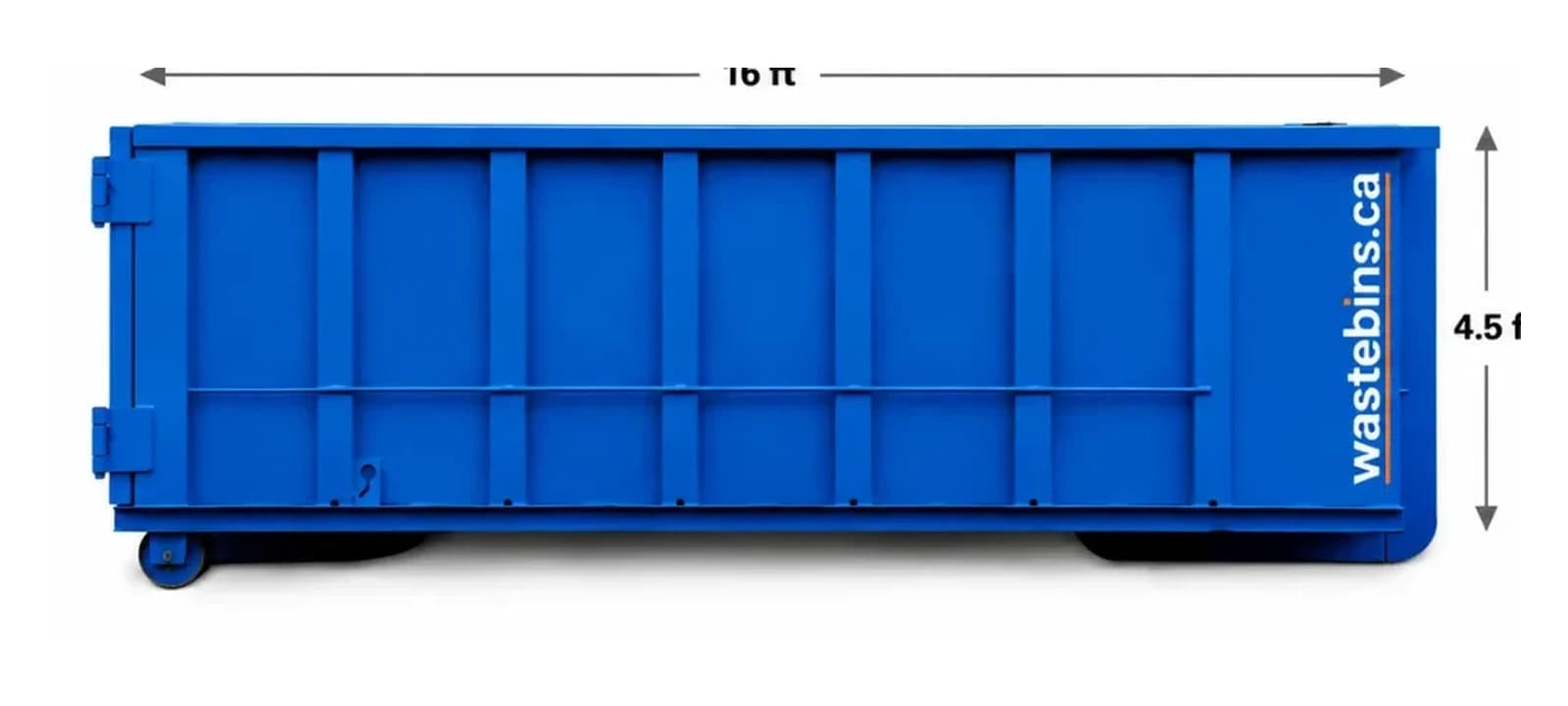
| Size | Volume | Included weight | Overage rate (CAD) |
|---|---|---|---|
| 10-yard | 10 cubic yards | 2 tons (4,000 lb) | $80-100/ton |
| 14-yard | 14 cubic yards | 2 tons (4,000 lb) | $80-100/ton |
| 20-yard | 20 cubic yards | 3 tons (6,000 lb) | $90-110/ton |
| 30-yard | 30 cubic yards | 4 tons (8,000 lb) | $100-120/ton |
| 40-yard | 40 cubic yards | 5 tons (10,000 lb) | $110-130/ton |
Overage rates vary by city based on transfer-station tipping fees. Vancouver runs the high end of the range; Calgary and Edmonton run the low end.
Material weights — the cheat sheet
To figure out if your job will hit weight cap, estimate how many cubic yards of each material you'll have. Then multiply by the per-yard weight:
| Material | Weight per cubic yard | Bin fills weight cap at... |
|---|---|---|
| Concrete (broken) | 2,500 lb | 10-yd: 1.6 yards · 20-yd: 2.4 yards |
| Brick | 2,800 lb | 10-yd: 1.4 yards · 20-yd: 2.1 yards |
| Asphalt | 2,400 lb | 10-yd: 1.7 yards · 20-yd: 2.5 yards |
| Soil/dirt | 2,000 lb | 10-yd: 2 yards · 20-yd: 3 yards |
| Asphalt shingle | 600 lb | 10-yd: 6.6 yards · 20-yd: 10 yards |
| Drywall | 500 lb | 10-yd: 8 yards · 20-yd: 12 yards |
| Lumber (mixed) | 400 lb | 10-yd: 10 yards (volume-limited) |
| Mixed renovation debris | 350 lb | volume-limited in all sizes |
| Furniture/cardboard | 150 lb | volume-limited in all sizes |
When weight matters (and when it doesn't)
For about 80% of residential jobs — kitchen renos, basement cleanouts, estate cleanouts, furniture haul-aways — weight is not the binding limit. You'll fill the bin volume-wise before approaching the weight cap. These jobs are predictable.
Weight becomes the binding limit when the job involves:
- Concrete, brick, or stone removal (driveway tear-out, patio demo)
- Asphalt removal
- Roofing tear-off (shingle is moderate, but a multi-layer roof adds up)
- Excavation or soil removal
- Mixed construction debris where heavy material is more than a third of the load
The heavy-debris classification
If your job is mostly concrete, brick, asphalt, or dirt, the standard mixed-debris bin pricing doesn't work. You'd hit the weight cap before filling the bin, and the per-ton overage on a small bin adds up fast.
For these jobs, we use a heavy-debris classification — same physical bin, different weight allowance and per-ton rate:
- 10-yard heavy-debris: includes 6 tons (vs 2 tons standard)
- 14-yard heavy-debris: includes 8 tons (vs 2 tons standard)
- 20-yard heavy-debris: includes 10 tons (vs 3 tons standard)
Heavy-debris bins are slightly more expensive at the base ($80-150 more depending on size and city) but the per-ton overage rate is lower because we're going straight to a specialized concrete-disposal facility instead of mixed-waste transfer.
To use this, mention "concrete," "brick," or "heavy debris" when booking. We'll quote the right rate up front.
How weighing actually happens
Every roll-off truck drives onto a certified scale at the transfer station on every trip:
- Empty pass: truck plus empty bin weighed before pickup
- Full pass: truck plus full bin weighed after pickup, before dumping
- Difference = load weight, recorded on a weighbill
The weighbill is auditable — every customer can request a copy of theirs after pickup. The number is what it is; we don't estimate or fudge.
Reducing the chance of overage
- Classify correctly at booking. If you know it's mostly concrete, ask for heavy-debris. Don't try to sneak it through as mixed renovation.
- Don't overfill above the rim. Anything above the rim (a "heaped" load) is technically illegal to transport and we have to level it before leaving. That can take additional time and cost.
- Estimate cubic yards first, weight second. If volume math says you'll be over capacity, size up before worrying about weight.
- Separate cardboard for recycling. Cardboard is light but bulky — keeping it out of the dumpster frees volume for heavier debris.
- Take photos as you load. If a billing dispute arises, photos help.
If you're still unsure about sizing or weight for your specific job, our quote page has a dispatch chat — describe the job in one sentence and we'll size it correctly. We deliver same-day in 60 Canadian cities. For complete pricing, see our rental cost guide.
Common questions.
How much can a 10-yard dumpster hold by weight?
A standard 10-yard residential roll-off includes 2 tons (4,000 lb) of weight in the base rental. Heavy debris (concrete, brick, soil) hits this limit before the volume limit — typically at about 1.5 yards full.
What is the overage fee?
Most Canadian cities charge $80-120 per additional ton above the included weight. The exact rate depends on local transfer-station tipping fees.
How do I know if I will be over the limit?
Heavy materials (concrete, asphalt, brick, dirt, shingle) hit weight first. If your job is mostly these materials, mention it at booking — we will classify the bin as heavy-debris with a different price structure.
Do you weigh every load?
Yes. Every dumpster gets weighed at the transfer station on the empty pass and full pass. The difference is the load weight that gets charged.
Can I avoid the overage by removing some debris before pickup?
Yes. If you realize the bin is too heavy, you can take a load off (mention it to dispatch). The truck weighs whatever is in the bin at pickup.
What is heavy-debris classification?
A heavy-debris bin is the same physical dumpster but classified at booking for concrete/brick/dirt/asphalt. It has a different included-weight allowance (usually 6-10 tons) and different per-ton overage pricing — typically more economical for these materials.
Ready to book a dumpster?
Same-day delivery in 60 Canadian cities. No card required. Bilingual dispatch.
Get a quote →